


Professional Amplifier
-
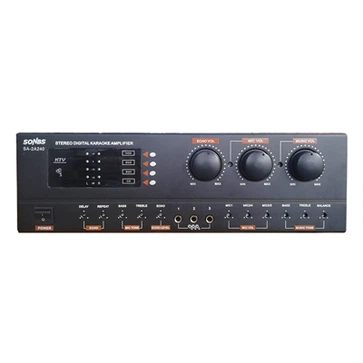
![SA-2A240 Buy Power Amplifier]()
-
![SA-2A180 Dj Digital Power Amplifier]()
-
![ST-800D ST-1000D ST-1400D ST-2000D Kit Power Amplifier]() ST-800D ST-1000D ST-1400D ST-2000D Kit Power AmplifierST-800D/ST-1000D/ST-1400D/ST-2000Dread more
ST-800D ST-1000D ST-1400D ST-2000D Kit Power AmplifierST-800D/ST-1000D/ST-1400D/ST-2000Dread more
Digital Power Amplifier -
![ST-B600 ST-B800 ST-B1000 Professional Digital Power Amplifier]() ST-B600 ST-B800 ST-B1000 Professional Digital Power Ampli...ST-B600/ST-B800/ST-B1000read more
ST-B600 ST-B800 ST-B1000 Professional Digital Power Ampli...ST-B600/ST-B800/ST-B1000read more
4 Channel Digital Power Amplifier -
![ST-F1600 ST-F1800 1u Digital Power Amplifier]() ST-F1600 ST-F1800 1u Digital Power AmplifierST-F1600/ST-F1800read more
ST-F1600 ST-F1800 1u Digital Power AmplifierST-F1600/ST-F1800read more
2 Channel Digital Power Amplifier -
![ST-F400 ST-F600 High Power Digital Amplifier Board]() ST-F400 ST-F600 High Power Digital Amplifier BoardST-F400/ST-F600 Class-H Power Amplifierread more
ST-F400 ST-F600 High Power Digital Amplifier BoardST-F400/ST-F600 Class-H Power Amplifierread more -
![ST-D500 ST-D800 ST-D1400 ST-D1800 Dsp Power Amplifier]() ST-D500 ST-D800 ST-D1400 ST-D1800 Dsp Power AmplifierST-D500/ST-D800/ST-D1400/ST-D1800read more
ST-D500 ST-D800 ST-D1400 ST-D1800 Dsp Power AmplifierST-D500/ST-D800/ST-D1400/ST-D1800read more
4 Channel Class-D DSP Power Amplifier -
![SD-350E SD-550E SD-700E SD-900E Power Amplifier 4 Channel Digital]() SD-350E SD-550E SD-700E SD-900E Power Amplifier 4 Channel...SD-350E/SD-550E/SD-700E/SD-900Eread more
SD-350E SD-550E SD-700E SD-900E Power Amplifier 4 Channel...SD-350E/SD-550E/SD-700E/SD-900Eread more
4 Channel Class-D Digital Power Amplifier -
![SD-2350 SD-2500 SD-2650 SD-2800 Digital Karaoke Power Amplifier]() SD-2350 SD-2500 SD-2650 SD-2800 Digital Karaoke Power Amp...SD-2350/SD-2500/SD-2650/SD-2800read more
SD-2350 SD-2500 SD-2650 SD-2800 Digital Karaoke Power Amp...SD-2350/SD-2500/SD-2650/SD-2800read more
2 Channel Class-D Digital Power Amplifier -
![SD-400H SD-600H SD-800H SD-1000H SD-1200H Power Amplifier for Sale]() SD-400H SD-600H SD-800H SD-1000H SD-1200H Power Amplifier...SD-400H/SD-600H/SD-800H/SD-1000H/SD-1200H 2 Channel Professional Power Amplifier (2.8-inch True Color Screen)read more
SD-400H SD-600H SD-800H SD-1000H SD-1200H Power Amplifier...SD-400H/SD-600H/SD-800H/SD-1000H/SD-1200H 2 Channel Professional Power Amplifier (2.8-inch True Color Screen)read more -
![SD-350F SD-300 SD-400 SD-600 Amplifier Power]() SD-350F SD-300 SD-400 SD-600 Amplifier PowerSD-350F/SD-300/SD-400/SD-600 Professional Power Amplifierread more
SD-350F SD-300 SD-400 SD-600 Amplifier PowerSD-350F/SD-300/SD-400/SD-600 Professional Power Amplifierread more -
![ST-4300T ST-6300T ST-8300T Dj Power Amplifiers]() ST-4300T ST-6300T ST-8300T Dj Power AmplifiersST-4300T/ST-6300T/ST-8300T Class-D Digital Power Amplifierread more
ST-4300T ST-6300T ST-8300T Dj Power AmplifiersST-4300T/ST-6300T/ST-8300T Class-D Digital Power Amplifierread more


Why Choose Us
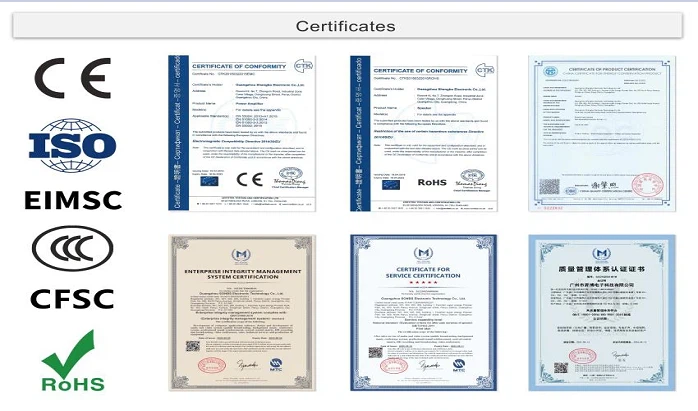
Our Certificate
ISO, CE, ROHS, EIMSC, CCC, CFSC.
Factory strength
SONBS Owns 3 Factories, 1 Marketing Technology Service Center And Over 15 Sub-Office.
Professional Team
Our professional engineer team will help partners to make turn-key solution for projects, improve solution until the customer is satisfied, and answer all technical questions.
Provide technical training
Our professional engineer team can offer technical training and guide the customer to install equipment, for big project, we can send engineer on site to guide the installation.
What is Professional Amplifier
An Professional Amplifier, or power amplifier for short, is an electronic amplifier that amplifies low-power electronic audio signals to a level sufficient to drive speakers or headphones. Audio power amplifiers are found in a variety of sound systems, including venue sound reinforcement, public address, home audio systems, and instrument amplifiers such as guitar amplifiers. It is the last electronic stage in the typical audio playback chain before the signal is sent to the speakers.
Benefits of Professional Amplifier
The power amplifier also features low distortion and high stability
Distortion refers to the non-linear changes that exist between the input signal and the output signal. The power amplifier needs to reduce distortion as much as possible to ensure that the output signal is consistent with the input signal. At the same time, the power amplifier also needs to have good stability to ensure the accuracy and reliability of the output signal during long-term operation.
The power amplifier also needs to have low noise
Noise refers to random signals in a circuit that can interfere with the normal transmission and amplification of required signals. In order to achieve high-quality signal amplification, the power amplifier needs to reduce the impact of noise as much as possible and provide clear and stable output signals.
The power amplifier also needs to have appropriate input and output impedance
Input impedance refers to the resistance of the input terminal to the external signal source, while output impedance refers to the resistance of the output terminal to the load. Proper input and output impedance can achieve maximum power transfer and signal matching, improving the efficiency and performance of the power amplifier.
Power amplifier has high amplification gain
Its main function is to amplify the voltage of the input signal to the required output voltage level to meet the needs of the specific application. Usually, the amplification factor of the power amplifier can reach tens to thousands of times, so that weak input signals can be effectively amplified.
Types of Professional Amplifier
Audio frequency power amplifiers
The electrical signal from an audio source, such as a microphone or musical instrument, is amplified by an electronic device known as an audio power amplifier to a level that is adequate for driving speakers or headphones. A power amplifier's main purpose is to boost the signal's strength, or in other words, to make it louder.An audio amplifier can produce anywhere from a few milliwatts (such as in headphone amplifiers) to hundreds of watts (such as in Hi-Fi/Home theatre systems). Considerations for choosing an audio power amplifier include the application-specific requirements, like power output, distortion, frequency response, and impedance matching. An audio system's overall sound quality can be significantly improved with a good power amplifier, and careful selection and installation can help get the greatest results.
Radio frequency power amplifiers
Electronic devices called radio frequency power amplifiers (RFPA) are used to transform weak radio frequency signals into strong signals for long-distance transmission. They are frequently utilised in a variety of communication systems, including radar, radio, television, and cell phones.Since they affect the effectiveness and range of the system, RF power amplifiers are essential parts of communication systems. The application requirements, including power output, efficiency, linearity, and frequency range, determine the type of RF power amplifier to use. A full understanding of amplifier theory, circuit design, and semiconductor technology is necessary to create a high-performance RFPA.
DC power amplifiers
Direct current (DC) power amplifiers are electrical components that boost a DC input signal to create a higher-power DC output signal. They are frequently employed in a wide range of commercial, academic, and military applications, including electric motors, radio communications, radar systems, and laser systems. It has three stages: an input stage for the signal, an amplifying stage, and an output stage. The DC input signal is obtained by the input stage, which then processes it to an appropriate level for the amplification stage. The signal power is increased at the amplification stage, which commonly employs transistors or vacuum tubes. The output stage generates the amplified DC output signal and serves as a load for the amplifier.
Application of Professional Amplifier
Propagation model corrected transmitter
When selecting sites for mobile communication base stations, it is necessary and necessary to use continuous wave simulation transmitters to correct the propagation model. Here, the power amplifier is used in conjunction with the signal generator to achieve correction of the model for each frequency band.
Cooperate with indoor distribution system
In mobile communication indoor distribution systems, power amplifiers can be used as analog transmitting systems or analog trunk amplifiers, and are especially suitable for multi-standard, multi-band integrated indoor distribution systems.
Base station transmitter to evaluate the base station antenna system
By outputting the same power as the base station transmitter, the broadband amplifier can be used to evaluate whether the actual coverage of the established antenna system meets the standard.
Measuring leaky coaxial cables
A power amplifier can be used to measure the leakage of leaky coaxial cables. If it is a broadband test, an equalizer can be used to compensate for the passband frequency response.
Intermodulation distortion of passive components
In the intermodulation measurement system of passive components, a high-power amplifier is required.
Used with signal generator
Power amplifiers can be used with mainstream signal generators to amplify signals and are widely used in fields such as MEMS testing, ultrasonic testing, electromagnetic field driving, wireless power transmission, and college electronic experimental testing.
Components of Professional Amplifier




Power Supply
Basically, a power amplifier uses the input signal to modulate DC from its power supply. This supply receives 120 volts AC from the mains outlet and converts it to DC to operate the transistors, FETs and MOSFETs and so on in the amp circuitry.Two types of power supply are analog and switching. A typical analog power supply rectifies the incoming 50 or 60 Hz AC and low-pass filters it to create DC for the power amplifier circuitry.
Input Stage
The input stage or “front end” accepts the input signals and feeds them to the output stage to be amplified. Here you'll find connectors that mate with the input cables.Level controls and any plug-in modules are part of the input stage as well. The level controls do not affect the gain of the amp; rather, they affect the input sensitivity – the input voltage required to drive the amp to full power.
Output Stage
This stage amplifies, or increases the power of, the input signal up to a level sufficient to drive the loudspeakers.In this stage are the power transistors (output devices), which tend to generate a lot of heat. Also in this stage are the output connectors which are wired to the loudspeakers.Four types of output or loudspeaker connectors are phone jacks, five-way binding posts (banana jacks), Speakon connectors and terminal blocks (screw terminals).
Networking
Another feature in many modern amps is networking. Network-capable amps can be part of an interconnected audio network, so they can be controlled and monitored from a central computer. This beats walking around on stage trying to figure out which amp has shut down.
Amplifier Class
Let's turn now to another aspect of power amplifier design. Amplifier class refers to the circuit design of the output stage, such as Class A, Class AB, Class D, and so on.
Professional Amplifier Functions
Remote control
This is a no brainer, really. At the least you should be able to change the volume at a distance. All that said, there are different ways this can be achieved. My preference is for the volume knob to either front a high-quality potentiometer, or act as a control for a ladder of attenuating resistors. And that means the remote should control a motor that rotates the knob.
Line level subwoofer output
If you're starting out on the high-fidelity path with a tight budget, this rca socket could prove very useful. I usually recommend that for your first speakers, aim for the best stand-mount speakers you can afford rather than going for full-range floorstanders. The quality will typically be better, but chances are they may be a little deficient in the bass. The sub output-on those stereo amps that offer one-sums the left and right channels, but usually doesn't filter it. When you can afford to, you can plug in an active sub, twiddle its level and crossover knobs and fill in the bass of your main speakers.
Pre-out on an integrated amp
This stereo output provides a straightforward upgrade path: You can switch to a higher quality power amplifier and use your integrated as a pre-amp.
Power in on an integrated amp
This adds a little flexibility if the amp also offers pre-outs. For example, you can put some kind of audio
Processor
That's not always a bad thing-between the pre and power amps.
Tape loop
Some pre and integrated amplifiers till offer tape out and tape in connections. If you can see yourself buying a device to record analogue signals, this may prove useful to you.
How to Choose Professional Amplifier
Power requirements
Determine the power needs of your speakers and audio system. Match the amplifier's power output (watts per channel) to the power handling capacity of your speakers. It's essential to avoid underpowering or overpowering your speakers, as both can result in distortion or damage.
Amplifier class
There are different amplifier classes, such as Class A, Class AB, Class D, and Class H. Each class has its own characteristics in terms of power efficiency, heat dissipation, and audio fidelity. Research the advantages and disadvantages of each class to choose the one that best suits your requirements.
Connectivity options
Consider the connectivity options provided by the amplifier. Ensure it has the necessary inputs and outputs to accommodate your audio sources, such as microphones, instruments, mixing consoles, or playback devices. Additionally, check for features like balanced XLR inputs or SpeakON connectors for professional-grade connections.
Build quality and reliability
Choose amplifiers from reputable brands known for their quality and reliability. Consider factors such as construction materials, cooling mechanisms, and overall durability. Read reviews and seek recommendations from audio professionals to ensure you select a reliable product.
Impedance compatibility
Check the amplifier's impedance ratings and ensure they match the impedance of your speakers. Impedance mismatch can lead to inefficient power transfer and affect sound quality.
Signal-to-noise ratio (SNR)
The SNR indicates the level of background noise present in the amplifier's output. A higher SNR value signifies a cleaner and more accurate sound reproduction. Look for amplifiers with a high SNR to maintain audio fidelity.
Features and protection mechanisms
Look for additional features that enhance usability and protect your equipment. These may include built-in limiters, thermal protection, short circuit protection, or overload protection. These features can safeguard your amplifier and connected devices from damage.
Budget
Determine your budget for the amplifier. While it's essential to invest in a quality amplifier, you should also consider your financial limitations. Balance your requirements with the available options within your budget range.

Use the current control function of the transistor or the voltage control function of the field-effect tube to convert the power of the power supply into a current that changes according to the input signal. Because sound is waves of different amplitudes and frequencies, that is, AC signal current, the collector current of the transistor is always β times the base current in the amplification area, and β is the current amplification factor of the transistor. Applying this point, if the small signal is injected into the base, the current flowing through the collector will be equal to β times the base current, and then isolate this signal with a DC blocking capacitor to obtain a large signal with a current (or voltage) that is β times the original. This is the amplifying effect of the transistor. After continuous current amplification, the power amplification is completed.
Main Indicators of Professional Amplifiers
Rate power
Refers to the continuous sine wave power. Under 500hz sine wave input and a certain load, the harmonic distortion is less than 1% of the output power, expressed as w/ch (watts per channel). Generally speaking, the higher the rated power, the higher the cost.
Total harmonic distortion (thd)
Refers to the percentage of high-order harmonics to the fundamental wave. The smaller the total harmonic distortion, the better. The total harmonic distortion of a good power amplifier can reach 0.02%.
Slew rate
The voltage amplitude rising per unit time, in volts/microsecond. It reflects the power amplifier's ability to track transient sound signals and is a transient characteristic index.
Damping factor
It is defined as the load impedance of the power amplifier (the internal resistance of the high-power tube plus the wiring resistance of the speaker), such as 8Ω: 0.04Ω=200:1. Generally, the ratio is relatively large, but it cannot too large, or it will make the speaker sound thin.
How to Maintain Professional Amplifier
Regular cleaning
Use a soft microfiber cloth to clean the surface of the amplifier, ensuring that no dust or dirt accumulates on it.Be careful not to use chemical cleaning agents to avoid damaging the casing or electronic components.
Check the power cord and plug
Regularly check the power cord and plug of the amplifier to ensure they are not worn, damaged, or loose.If any problems are found, immediately repair or replace the damaged parts.
Ventilation and heat dissipation
Amplifiers typically generate heat to ensure sufficient ventilation to prevent overheating.Do not block the ventilation hole or radiator of the amplifier.
Regular inspection of internal components
If you have experience in electronic repair, you can regularly open the amplifier casing and inspect internal components such as capacitors, resistors, and circuit boards to ensure they are not significantly damaged.
Check interfaces and connections
Regularly check the input and output connections of the amplifier to ensure that the plugs and connecting wires are not loose or damaged.
Use appropriate volume
Do not use excessive volume for a long time, as this may cause the amplifier to overheat or damage the speakers.
Lightning protection
If thunderstorms frequently occur in your area, consider using lightning protection equipment to protect the power amplifier from lightning damage.
Keep the environment dry
Avoid exposing the amplifier to damp environments to prevent corrosion or short circuits on the circuit board.
Our Factory
SONBS owns 3 factories, 1 marketing technology service center and over 15 sub-office ,covering a total area of more than 50,000 square meters. We have 50 R&D engineers, 100 pre-sales and after-sales technicians, 250 sales and 200 assembling workers, all totally about 600 employees.


certificate

FAQ
As one of the most professional amplifier manufacturers in China, we're featured by quality products and good service. Please rest assured to buy customized professional amplifier at competitive price from our factory.