


Pa Speaker


Why Choose Us
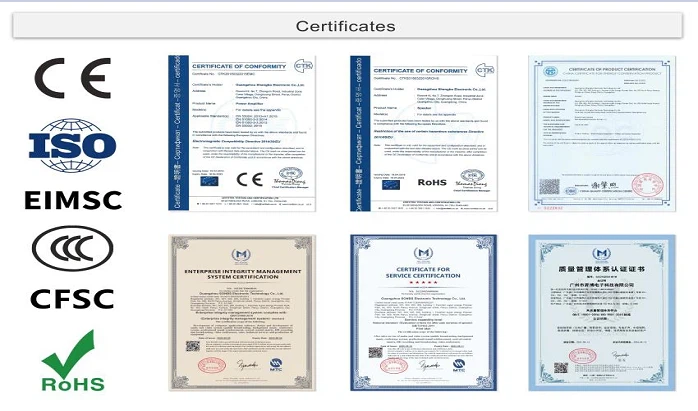
Our Certificate
ISO, CE, ROHS, EIMSC, CCC, CFSC.
Factory strength
SONBS Owns 3 Factories, 1 Marketing Technology Service Center And Over 15 Sub-Office.
Professional Team
Our professional engineer team will help partners to make turn-key solution for projects, improve solution until the customer is satisfied, and answer all technical questions.
Provide technical training
Our professional engineer team can offer technical training and guide the customer to install equipment, for big project, we can send engineer on site to guide the installation.
What is Pa Speaker
Pa speaker is an electronic system that includes microphones, amplifiers, speakers and related equipment. It increases the apparent volume of a human voice, musical instrument or other acoustic sound source or recorded voice or music. Amplification systems can be used in any public place where the voices of announcers, performers, etc. are required to be fully heard at a distance or over a large area. Typical applications include sports venues, public transport and facilities, and live or recorded music venues and events.
Benefits of Pa Speaker
Enhanced audio distribution
Pa speaker provide a unique advantage by distributing audio evenly throughout a room. Unlike traditional speakers confined to specific locations, Pa Speaker can be strategically installed to cover a wider area, ensuring a consistent and immersive audio experience for everyone in the room. Whether you're hosting a party, watching a movie, or simply enjoying your favorite music, Pa Speaker create a balanced audio distribution that enhances the overall atmosphere.
Space-saving solution
One of the standout advantages of speaker is their ability to blend seamlessly with your home's interior design while saving valuable floor or shelf space. By mounting the speakers on the ceiling, you eliminate the need for bulky floor-standing speakers or bookshelf units, freeing up space and allowing for a cleaner and more aesthetically pleasing living environment. Pa Speaker offer a discreet and elegant audio solution that complements any decor style.
Unobtrusive audio integration
Pa speaker offer seamless audio integration into your home environment. With advancements in wireless technology, you can connect and control your Pa Speaker effortlessly. Many ceiling speaker systems can be synced with smart devices, allowing you to manage your audio preferences through voice commands or smartphone apps. This unobtrusive integration enhances convenience and accessibility, putting you in complete control of your audio experience.
Versatile applications
Pa speaker are not limited to specific rooms or areas. They can be installed in various spaces, including living rooms, bedrooms, kitchens, home offices, or outdoor patios. Their versatility allows you to enjoy high-quality audio throughout your home, whether you're entertaining guests, relaxing in the bedroom, or cooking in the kitchen. With multi-room audio capabilities, you can synchronize your Pa Speaker and create a harmonious audio ambiance throughout your entire house.
Types of Pa Speaker
Full-Range Speakers
Full-range speakers are the most common type of PA speakers. They are designed to handle a wide range of frequencies, making them versatile for various applications, including music events, public gatherings, and conferences. Full-range speakers are typically made with a cone-shaped driver and a tweeter, which help produce a full, balanced sound.
Subwoofers
Subwoofers are specialized speakers that are designed to handle low-frequency sounds, such as bass and drums. They are typically larger and more powerful than full-range speakers, producing a deep, rich bass sound. Subwoofers are commonly used in music events, where they help enhance the overall sound quality and add depth to the music.
Line Array Speakers
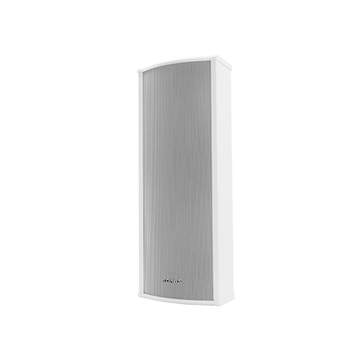
Line array speakers are a specialized type of PA speaker that is designed to provide even sound coverage over a large area. They consist of a series of smaller speakers arranged in a vertical line, which helps produce a clear, uniform sound throughout the venue. Line array speakers are typically used in large music events and conferences, where even sound coverage is essential.
Horn Speakers
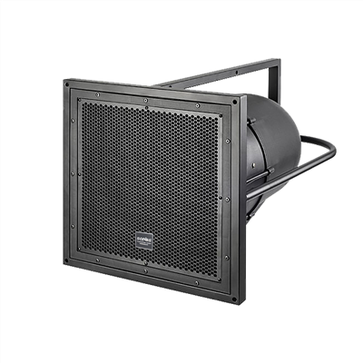
Horn speakers are a type of PA speaker that uses a horn-shaped enclosure to amplify the sound. They are typically used for outdoor applications, such as public gatherings and sporting events. Horn speakers are designed to produce a loud, clear sound that can be heard over long distances.
Pa Speaker Performance Index


Frequency response
The major frequency range in which the loudspeaker operates is represented by this indicator. When a constant voltage signal source is applied to a speaker and the signal source's frequency is changed from low to high, the sound pressure created by the speaker changes with the frequency shift. The greater the range of the resulting sound pressure-frequency curve, the better the sound reproduction properties.
Rated impedance
It is the impedance value measured at the speaker's input at a specific operating frequency. The producer usually specifies it on the product's brand nameplate. In the rated frequency range, the rated impedance is usually the impedance modulus at which the highest work is predicted. Rated impedance is commonly stated as 4 ohms, 8 ohms, 16 ohms, 32 ohms, and 3 ohms, 6 ohms, and so on in the United States, and 3 ohms, 6 ohms, and so on in other countries.
Power
One of the most crucial factors to consider when selecting a loudspeaker is its power. When a loudspeaker can work continuously for a long time without producing anomalous sound, this is the input power. In most cases, the pink noise signal is utilized in the test, which is run through a specified filter within the rated frequency range.The rated noise power differs from the maximum noise power. It denotes the loudspeaker's ability to endure high input power for a short length of time. It simply takes a few seconds or minutes to complete the test. The maximum noise power is typically 2-4 times the rated power.
Sensitivity
When a pink noise signal voltage equivalent to 1W power on the rated impedance is given to the speaker, the typical sensitivity is measured at 1m in the axial direction. Each speaker unit's sensitivity in the frequency region in which it is responsible for reproduction must be nearly identical in order to balance the high, mid, and bass of the entire speaker during reproduction. The left and right channels of stereo speakers, in particular, must be carefully screened and matched. The output sound pressure level differential of the unit used by the left and right channels must be between plus or minus 1dB, or the sound picture positioning will be affected.
Directivity
The ability of a loudspeaker to transmit sound waves in all directions in space is referred to as directivity. The curve of the sound pressure level with the angle of radiation is a common representation. The directivity of a loudspeaker is proportional to its frequency, and at low frequencies, there is usually no discernible directivity. The directivity will become sharp at high frequencies due to the short wavelength of the sound waves. To boost directivity, some speakers place multiple high-frequency components in different directions. The speaker's caliber has an impact on the directivity. In general, the directivity is sharper when the caliber is large; when the caliber is small, the directivity is wider.
Distortion
Wave distortion, intermodulation distortion, and transient intermodulation distortion are all examples of speaker system distortion. A speaker's distortion characteristics are more prone to deteriorate than a single speaker's distortion characteristics. Due to poor design or debugging, distortion is usually considerably amplified near the crossover point. Low-frequency harmonic distortion, particularly near the resonance frequency, is the most common source of harmonic distortion. The minimal needed harmonic distortion for high-fidelity speakers is less than 2%.
Application of Pa Speaker
Retail
It's no secret that blaring sound will get your display unplugged. That's why directional sound is so important for retail applications. High quality directional Pa Speaker will deliver your message and prevent audio from spilling into unintended listening areas. Our directional Pa Speaker have even been used for outdoor retail applications.
Museum
Directional Pa Speaker are essential to museum environments, especially when multiple displays are installed in close proximity to one another. We are all too familiar with applications like these. But what about broader zones? Directional Pa Speaker for larger zones where sound must be contained are the perfect solution.
Restaurant
The possibilities are limitless in restaurant applications. From beaming sound to people seated across a bar to focusing audio to entire tables, directional Pa Speaker are the perfect solution for showing multiple games with audio in a single space. Or in multiple spaces!
Dance Floor
Believe it or not, directional Pa Speaker can be used to focus sound to large zones like dance floors. Gone are the days when outdoor clubs worried about noise ordinances and disturbing nearby neighbors or residences. With directional subwoofers, it's easier than ever to focus high quality sound.
Airport
Directional sound is the perfect solution for airport applications. Between screens running news, kiosks and interactive displays, directional Pa Speaker prevent airports from becoming cacophonous spaces.
Education
Schools, colleges and universities have created incredible collaborative learning environments using directional Pa Speaker.
Videoconferencing
Directional Pa Speaker are a game-changer for videoconferencing applications. Especially when they're paired with highly directional microphones where the videoconferencing takes place in a public environment.
Control Room
For control room operators, wearing bulky headphones for hours at a time can be cumbersome and uncomfortable. Thanks to sound domes and other directional Pa Speaker, operators can work for hours without the annoyance of troublesome headphones.
Components of Pa Speaker
Sound cone
The cone's vibration is employed to cause the air to vibrate, resulting in the sound's heavy death. As a result, the cone's substance influences the speaker's individuality.
Basin frame
The following are the types and properties of pot frame materials: Low-cost iron sheet; die-casting: difficult to deform; synthetic material: light weight and difficult to distort.
Voice coil stand
The majority of the voice coil frame is made of aluminum sheets. Because the voice coil structure must account for heat dissipation, the aluminum skin provides excellent heat dissipation, is light, and does not distort. It was also available on paper, but that option has since been discontinued. There is also a type of KISV epoxy resin board that performs better.
Magnet
Ferrite: The most common and traditional mineral, with big size and low price.The magnetic of neodymium iron is seven times that of ferrite, but it is unstable and easily demagnetized, therefore it cannot be used in place of ferrite.Strontium magnets have high efficiency, but because of their small volume, they are exclusively utilized in tweeters.
Pieces
The supporting piece, also known as a spring plate or an elastic wave, is used to support the loudspeaker's vibrations. The centering supporting component is made of two major materials: cotton fabric and polyimide fiber.
Folding ring
The folding ring connects the cone with the frame, providing support for the cone's vibration mechanism as well as compliance restoration force and dampening effect.
Dust cap
The primary purpose is to keep dust and debris out of the magnetic gap. Paper, cloth, aluminum, plastic, or carbon fiber fabric are among the materials utilized. A hemisphere is the most common shape.
How to Choose Pa Speaker
Size, Power, Features
Although they add a lot of bulk to your system, subwoofers—such as this powered JBL EON618S—can make a huge difference in how your music impacts the audience.A major factor in determining what type of PA you'll need is whether you're going to be using the system strictly for rehearsing, or whether you'll be taking it on gigs as well. If it's the former, you can get by with lower power and smaller speakers. But if you're going to gig with it, you'll need a more substantial system.The type of music you play is also a consideration. If you're a band with drums, or you're a DJ, you'll need a bigger and more powerful system than a solo singer or acoustic group would, because you'll need to reproduce substantially more low-end information. In that case, you might consider supplementing your main speakers with a subwoofer or two.
Watch Your Headroom
Venue size is also important. Are you going to play small clubs, large clubs or outdoor shows? Obviously, the bigger the venue, the more power you'll need. The goal is to have enough power in reserve so that your speakers don't distort, even when there are loud peaks in the music. This is what is referred to as “headroom.” Having enough headroom is a must for clean, distortion-free sound. To estimate how much power you'll need for your system, check out these guidelines from Crown.
Active vs. Passive Speakers
Active (aka “powered”) speaker technology has come a long way, and now represents a convenient, affordable and space-saving option for PA systems. Having powered speakers means you don't have to carry around separate power amps. It also means you have the freedom to upgrade your speakers down the road, without worrying about compatibility with power amps in terms of ohms (which measure electrical resistance) and power handling.
PA to Go
The quality of your PA system can have a huge impact on your show or rehearsal. It's as important to the success of your act as your personal instruments and amplifiers. When shopping for a PA, put in the time and energy to research and buy a system that will meet the needs of your group. Make sure you have enough headroom and leave open the potential for expanding your system. You'll be glad you did.
By the current control action of triode or the voltage control action of field effect tube, PA can convert the power of the power supply to the current which varies according to the input signal. Because the sound is wave with different amplitude and frequency, the transistor's collector current is always β times of the base current. Because of this, if small signal is injected into the base, the current through collector will be equal to β times of the base current. And then the signal is isolated by the blocking capacitor to get the large signal which current (or voltage) is β times of the original signal. This phenomenon become triode amplifying function. After amplifying constantly current, power amplification is completed.
Check the power supply
Before you plug in any of the components of the PA system, you need to check the power supply and make sure that it is safe and sufficient. You should use a multimeter to measure the voltage and current of the outlets that you will use, and avoid any that are overloaded, damaged, or unstable. You should also use surge protectors, extension cords, and power strips that are rated for the power consumption of your PA system, and avoid any daisy chains or loops that could cause interference or overload.
Connect the components
Once you have verified the power supply, you can start connecting the components of the PA system. You should follow the manufacturer's instructions and use the appropriate cables and connectors for each device. You should also label the cables and keep them tidy and secure, to avoid any tripping hazards or loose connections. You should connect the microphones to the mixer, the mixer to the amplifier, and the amplifier to the speakers, in that order. You should also connect any monitors, effects, or other devices that you need.
Test the sound quality
After you have connected the components, you need to test the sound quality and adjust the settings accordingly. You should turn on the devices one by one, starting from the power source and ending with the speakers, and check for any hums, buzzes, or noises that could indicate a faulty connection or a ground loop. You should also check the levels, EQ, and balance of each channel on the mixer, and use a sound meter to measure the volume and frequency response of the speakers. You should test the sound quality with different sources, such as music, speech, or instruments, and make sure that the sound is clear, crisp, and consistent throughout the venue.
Monitor the performance
During the event, you need to monitor the performance of the PA system and make sure that it does not overheat, distort, or fail. You should keep an eye on the meters, indicators, and displays of the devices, and watch out for any signs of clipping, feedback, or interference. You should also listen to the sound quality and make any adjustments as needed, such as changing the levels, EQ, or effects. You should also have a backup plan in case of any emergencies, such as spare batteries, cables, or devices.
Our Factory
SONBS owns 3 factories, 1 marketing technology service center and over 15 sub-office ,covering a total area of more than 50,000 square meters. We have 50 R&D engineers, 100 pre-sales and after-sales technicians, 250 sales and 200 assembling workers, all totally about 600 employees.


certificate

FAQ
As one of the most professional pa speaker manufacturers in China, we're featured by quality products and good service. Please rest assured to buy customized pa speaker at competitive price from our factory.